Growth Engineer
When I joined, outbound was starting from scratch. I built the email, calling and data layer that 15 SDRs and 2 AEs worked from, and dealt with everything else the floor ran into - onboarding new hires, fixing whatever broke mid-day.
The problem
The problem was not the reps. The system was basic and not optimized for scale - fine for a small team, with no room for the volume the business was heading toward.
What I built
I built the outbound engine - email, calling and the data underneath both - plus the n8n and Slack layer that made it usable by the whole floor.
- Calling data handled end to end in Clay: list building, dedupe, waterfall enrichment, validation. Enough depth that I could rebuild most of it outside the tool.
- Email taken from zero: I set up the domains and mailboxes for 10,000 sends a day of volume, wrote the copy, managed deliverability and domain reputation, built the lead lists, and scaled when the market called for it, about 300k a month at peak. I built the dashboards for it too.
- LinkedIn outreach to the same ICPs, running next to email and calls instead of on its own.
- The cold-call system: JustCall and SalesDialer connected to Clay and HubSpot, with the next account's info ready before the current call ended.
- All of our n8n: fixing bugs, extending workflows, building new ones as needs came in. JavaScript and JSON did the glue work, and the important stuff posted into Slack - demos as they were booked, enrichment handed to SDRs in the channel they were already working in.
- Python for scraping and the one-off automations that come up constantly, plus the supporting tools - FullEnrich, LeadMagic, Apollo, Zapmail, Namecheap, scraping extensions.
- I was also part of the other side of growth: the company newsletter and influencer outreach.
- Outside the tooling, I onboarded new SDRs, answered whatever technical questions came up, and handled the call and sales ops that kept the reps dialing. One person to ask instead of a ticket queue.
How it worked
Every record went through the same steps - source, dedupe, enrich, score, tier - and then into a sequence or a call block. Dispositions went into HubSpot as the call ended. Log it later and it never gets logged right.
When an SDR booked a demo, the prospect immediately got an email showing what the product would do for them, sent from our in-house tools, and it moved the show-up rate. Give someone something useful for free and they tend to show up. That is also why we switched the main metric from demos booked to show-ups: a demo nobody attends is not a result.
n8n did the orchestration and I owned all of it, fixing and extending workflows as needs surfaced, usually the same day. Everything reported into Slack. Python handled the scraping and the small temporary automations that did not deserve a full workflow.
Running the numbers
I put tracking on everything - all fifteen SDRs, every call, list and campaign - and ran the analytics the way a bigger revenue org would, not the way a team this size usually does. The default setup at this scale is a CRM dashboard counting demos booked, plus activity numbers nobody has defined. I sat in on the CEO's meetings with the data analytics team and brought that thinking down to the dialer: every test had a hypothesis, and every result led to one of two decisions, keep going or kill it.
- Different metrics for different channels - calling and cold email do not succeed on the same numbers - and we picked them before the test ran, not after.
- One agreed definition for every stage: dials, connects, conversations, meetings booked, shows, held. If a number means two different things, it is not a number.
- Week-over-week numbers per rep and per list, so we could see who was improving, which lists were carrying pipeline, and which scripts held up in real conversations.
- The two numbers I was responsible for, show-up rate and demos booked, both went up. Reminders and better pre-call context lifted shows; better lists and talk tracks lifted bookings.
- One dashboard over the CRM, the dialer and the campaigns, so management and the reps looked at the same numbers instead of arguing over different spreadsheets.
What came out
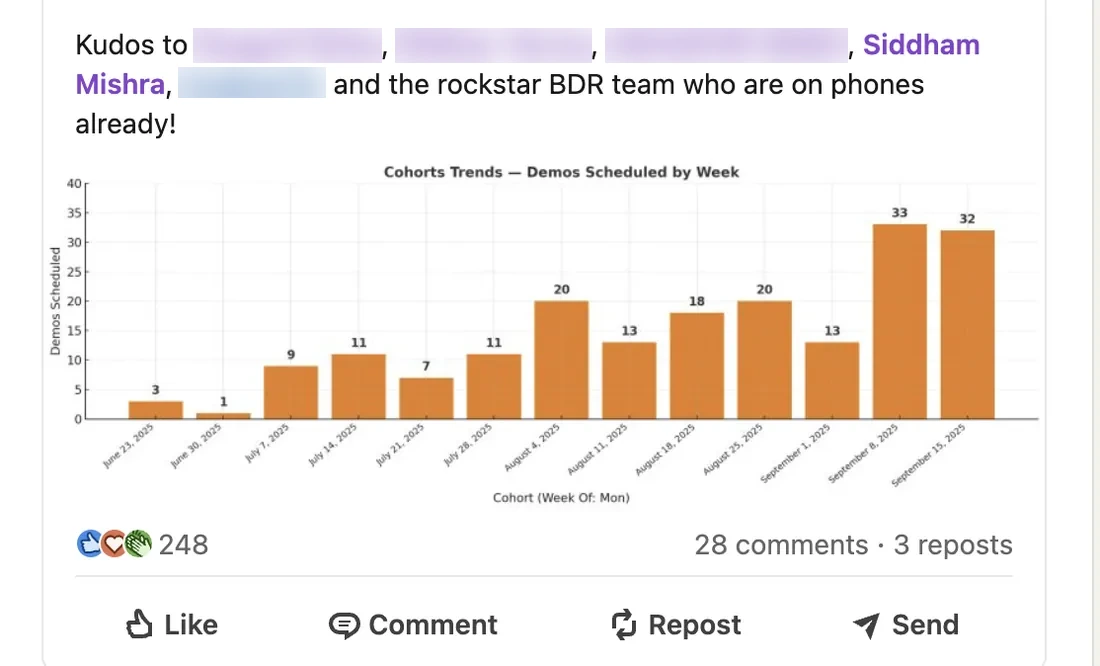
The core build was the cold-calling infrastructure - the data layer 15 SDRs and 2 AEs dialed from, wired into JustCall, SalesDialer, Clay and HubSpot - and the team booked 100+ demos in a quarter on it. Email went from zero to 300k sends a month, and the analytics told us where to push: show-up rate and demos booked both climbed as volume scaled. The rest: fifteen SDRs on one system instead of fifteen spreadsheets, and a few product features I suggested from the floor that shipped.